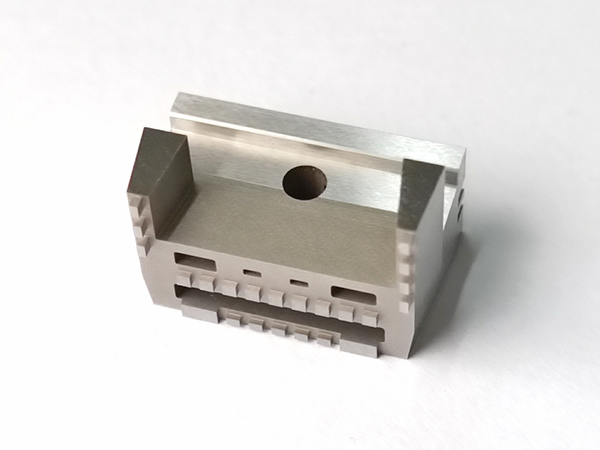
The requirements for connector molds are relatively high. What should be paid attention to when designing and processing?
Connector mold design considerations
1. The connector terminal mold must be rigid enough to meet the requirements of life and precision.
2. The structure should be as simple and practical as possible, with reasonable economy, and it should be conducive to the processing of mold parts.
3. The material can be easily fed, the operation should be simple and safe, and the pieces are easy to output.
4. The positioning of the connector terminal mold parts should be accurate and reliable, and the connection should be firm.
5. The structure of the connector terminal mold should be coordinated with the existing stamping equipment, easy to install, and easy to replace the wearing parts.
Precautions for connector mold processing
1. High machining accuracy requirements: the combination of upper and lower molds, the combination of inserts and cavities, and the assembly of modules all require high machining accuracy, and the dimensional accuracy of precision molds often reaches μm level;
2. Complex shapes and processes: some products such as 5G base station connectors, automotive connectors, mobile phone backplane connectors, etc., the shape of the surface is composed of a variety of curved surfaces.
3. Corrosion resistance and wear resistance: The surface treatment layer of metal structural parts and contact parts may cause galvanic corrosion, and good corrosion resistance is required. Connectors are used frequently, and in order to meet the life requirements of the product, the wear resistance of the connector must be guaranteed.
There are still many problems to be paid attention to in terms of design and processing of connector molds. All in all, the structure of connector molds is relatively complex, and the requirements for each process are also relatively high. We are carrying out connector mold-related operations. must strictly follow its operating specifications and precautions.